Plum blossom
On this page
Even during the cold of late winter, the vibrant pinks and reds of plum blossoms are sure to brighten your day.
The beauty of the plum blossom has seen it feature in painting, poetry and music. even become a national icon.
It has even become a national icon in China where it is known as one of the Three Friends of Winter and is one of the Four Gentlemen of flowers featured in Chinese art.
Like many blossom trees, the plum blossom is a member of the Prunus genus Despite its name though, it is actually a type of apricot rather than a plum.
Plant description
Plum blossom grows as a shrub or a small tree and reaches up to 10m. The flowers appear before the leaves in late winter and early spring, in red, pink or white. These flowers are around 2cm across, with upwards of five petals, and yellow stamen in the centre. The leaves are green, around 8cm long, oval-shaped and have slightly serrated edges. After the flowers fall, the fruits appear. They are a round, yellow-green stone fruit about 2cm across.


Plant uses
Cultural
The plum blossom is the national flower of Taiwan.
In Chinese art, plum blossoms symbolise perseverance, hope, beauty and virtue. They are also considered the flower of winter.
In Korea and Japan, the plum blossom is a symbol of spring.
Food and drink
Both the fruit and the flower of plum blossoms are used in China, Japan and Korea in making teas, liquor and wine.
In China, plum blossom fruits are used to make a sweet sauce known as meijiang.
In Japan, unripe plum blossom fruits are pickled in salt and vinegar to make umeboshi. In China, a similar recipe is used to make suanmeizi.
Health
In traditional Chinese medicine, plum blossoms are used to regulate the spleen and stomach and cleanse the body.
Did you know?
As a popular ornamental, there are over 300 cultivars of plum blossom, including ‘Peggy Clarke’, ‘Kobai’ and ‘Bungo’.
People have been making use of plum blossom trees for at least 7000 years, as fossilised fruit pits found in China show.
A plum blossom tree near the Temple of Zhamei, China is recorded to have been planted in the 13th century, making it over 700 years old.
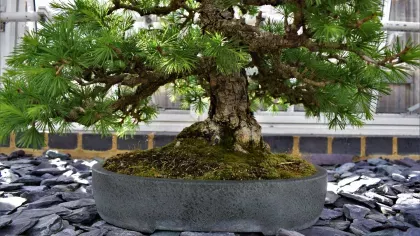
Bonsai of plum blossom are known as Bonbai.
Where in the world?

Forests and mountains, between 1,700 to 3,100m.
Find it in our gardens
Kew Gardens
A botanic garden in southwest London with the world’s most diverse living plant collection.
Location
View map of Kew GardensBest time to see
More about this plant
Other plants

Japanese cherry
Prunus serrulata

Tea plant
Camellia sinensis
More from Kew