30 April 2026
5 min read
Kew’s botanical hoaxes: the specimens that tricked even the experts
Kew’s Digitisation Project has uncovered that not everything pressed between the pages of the herbarium is as it seems. But who orchestrated these botanical tricks decades ago, and why?


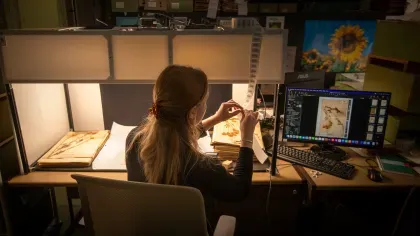
While exploring some of the 7.3 million dried plant specimens for Kew’s Digitisation Project that are being made freely accessible to all, curator Eloise Johl noticed a handful of plants that seemed... odd. Fraudulent discoveries of exciting new creatures aren’t uncommon in scientific history. They usually involved animals - but this time, the tricksters were botanical.
From the 17th to the 19th century, animal hoaxes weren’t too uncommon. Most notably, mermaids were widely believed to actually exist, and this was in part due to people making curious creations that combined the torso of a monkey with the tail of a fish, producing striking (if not terrifying) taxidermy hybrids.
Some were alarmingly good. A famous example is the “Piltdown Man” from 1912; a fraudulent fossil of an ancient human constructed from an orangutan’s jaw and chimpanzee’s teeth. This clever hoax managed to fool the scientific community for almost 40 years before anyone realised the truth.
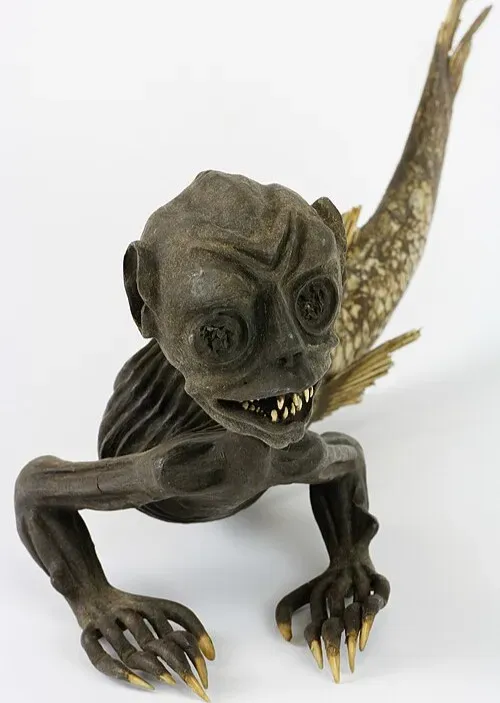
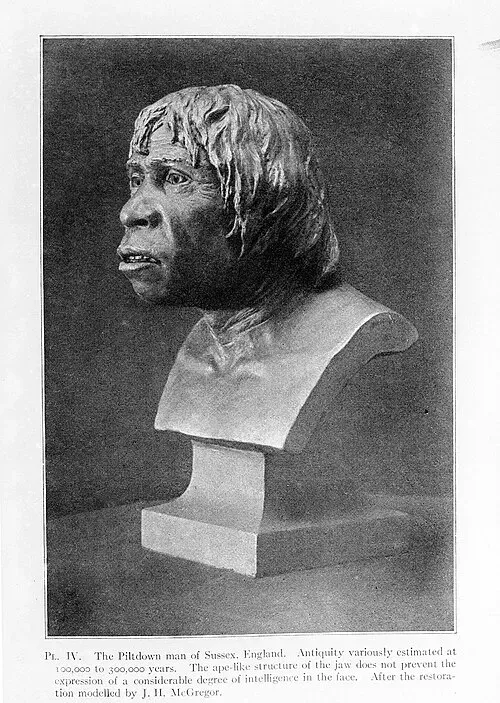
Could this be one of botany’s biggest fraudsters?
Whilst working through specimens that were due to be digitised, I happened to stumble upon an odd-looking specimen in Kew’s Herbarium that seemed to show the same kind of trickery behind the old monkey‑fish hoax.
First, I noticed that it was determined as a mixed collection, meaning that there were multiple species on one sheet. Then, having taken a closer look, I could see the join where the flower had been inserted into the branch.
At the time I noticed some writings on the folder saying it was a hoax specimen – yet it wasn't common knowledge that we had such rare specimens in our collection and so I became very curious in the story behind it. This led to me going down a bit of a rabbit hole of reading around this area and looking to see if I could find other – perhaps undiscovered or similar - examples in Kew’s collection.
The specimen I came across was identified as Quesnelia tillandsioides by J. G. Baker, Assistant Keeper of the Kew Herbarium in 1882, a decade after being received from a man named Auguste Glaziou. The ‘newly discovered' plant was formally published and even illustrated in Flora Brasiliensis in 1892.
Originally from France, Glaziou had relocated to Rio de Janeiro in the mid 1800s at the request of Emperor Dom Pedro II. During this time, Glaziou participated in plant collecting in - what is known today as - Brasilia.
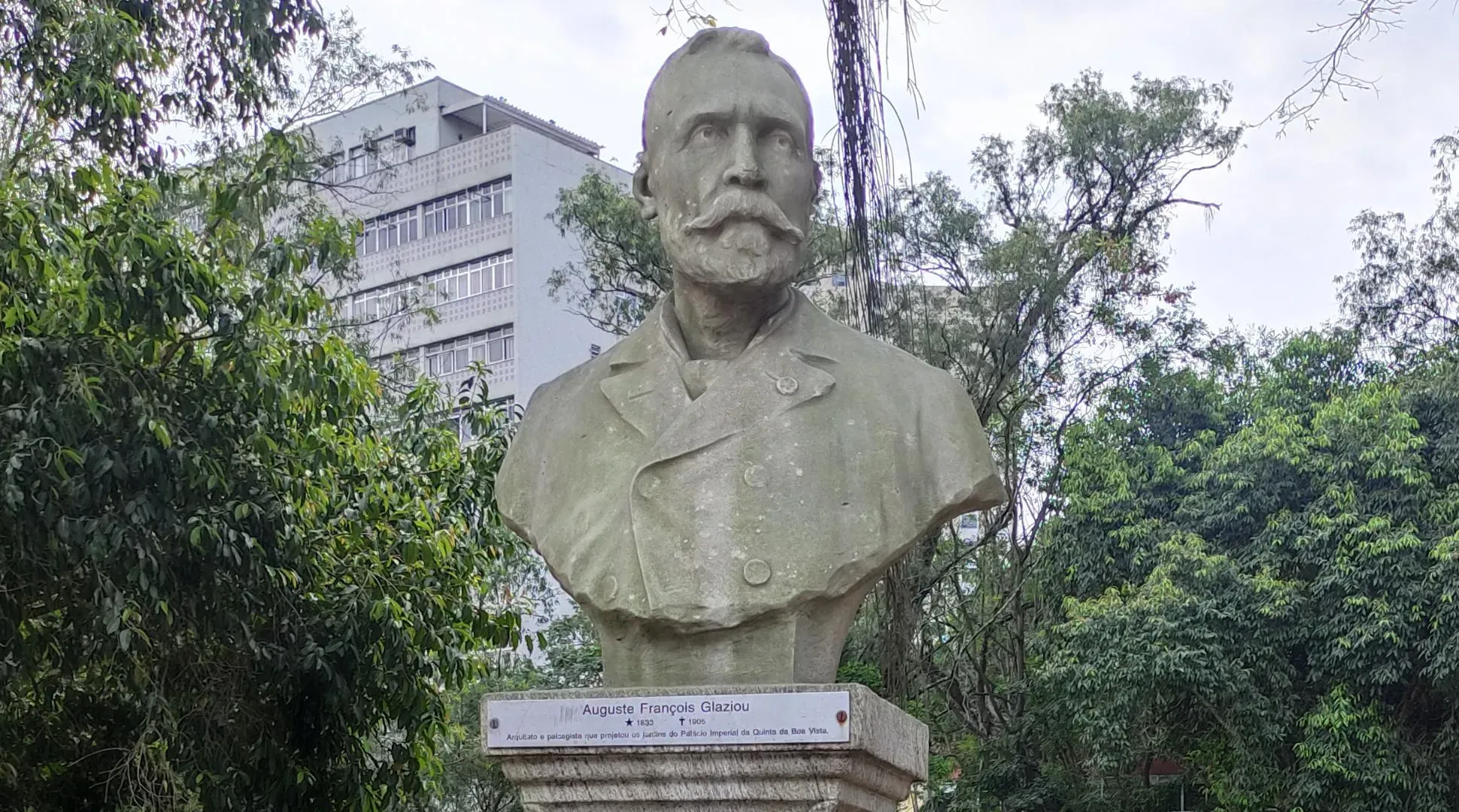
It was not until 1906 that the truth was uncovered and Glaziou’s secrets were revealed. The specimen was a carefully constructed combination of the flowers of Quesnelia liboniana inserted into the rosette of another plant entirely.
It took another 60 years until it was uncovered that this base plant was Vriesea poenulata, a species frequently collected by Glaziou!
This specimen raised the question: was this deception accidental, or did Glaziou himself construct the hoax?
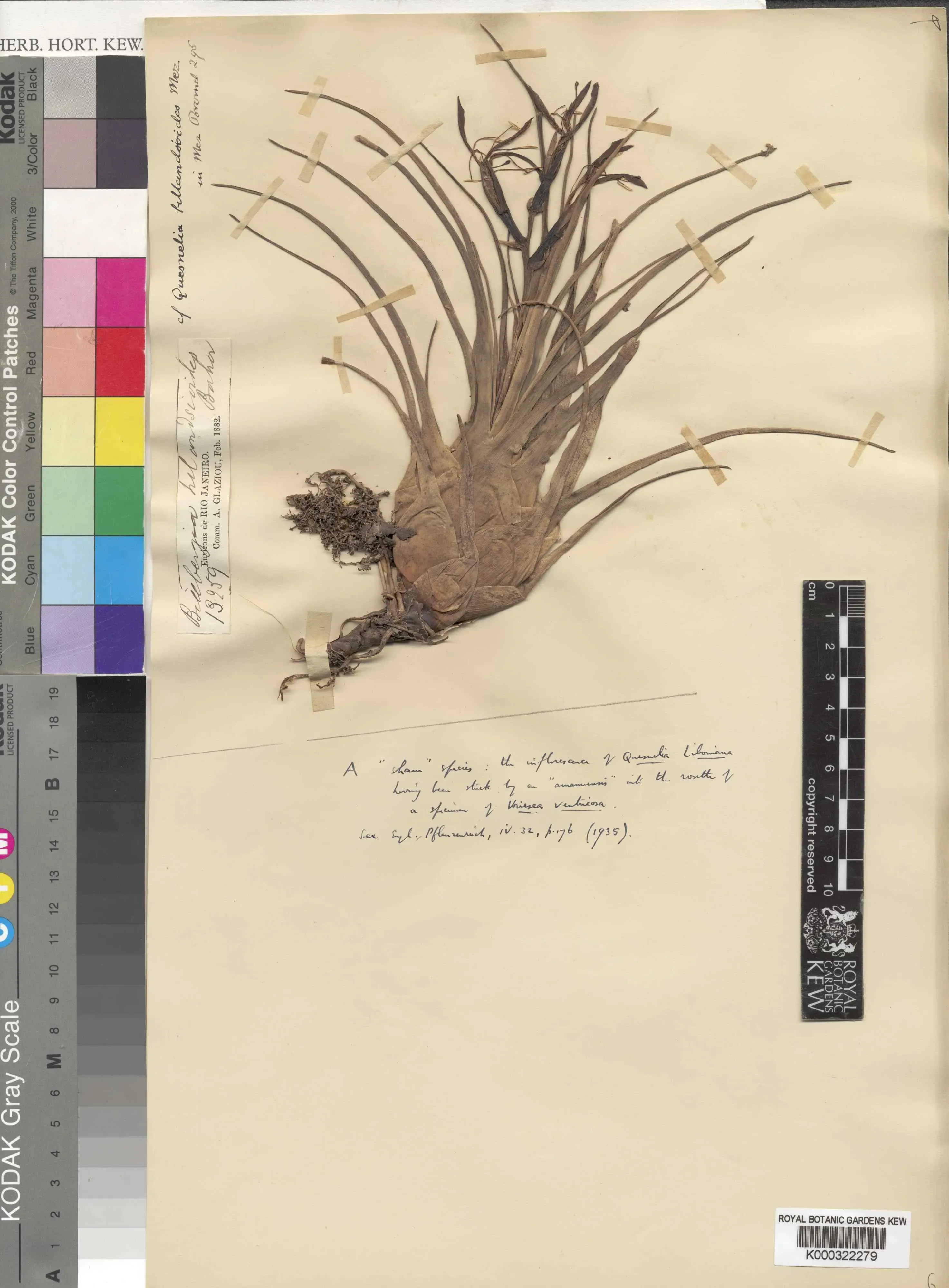
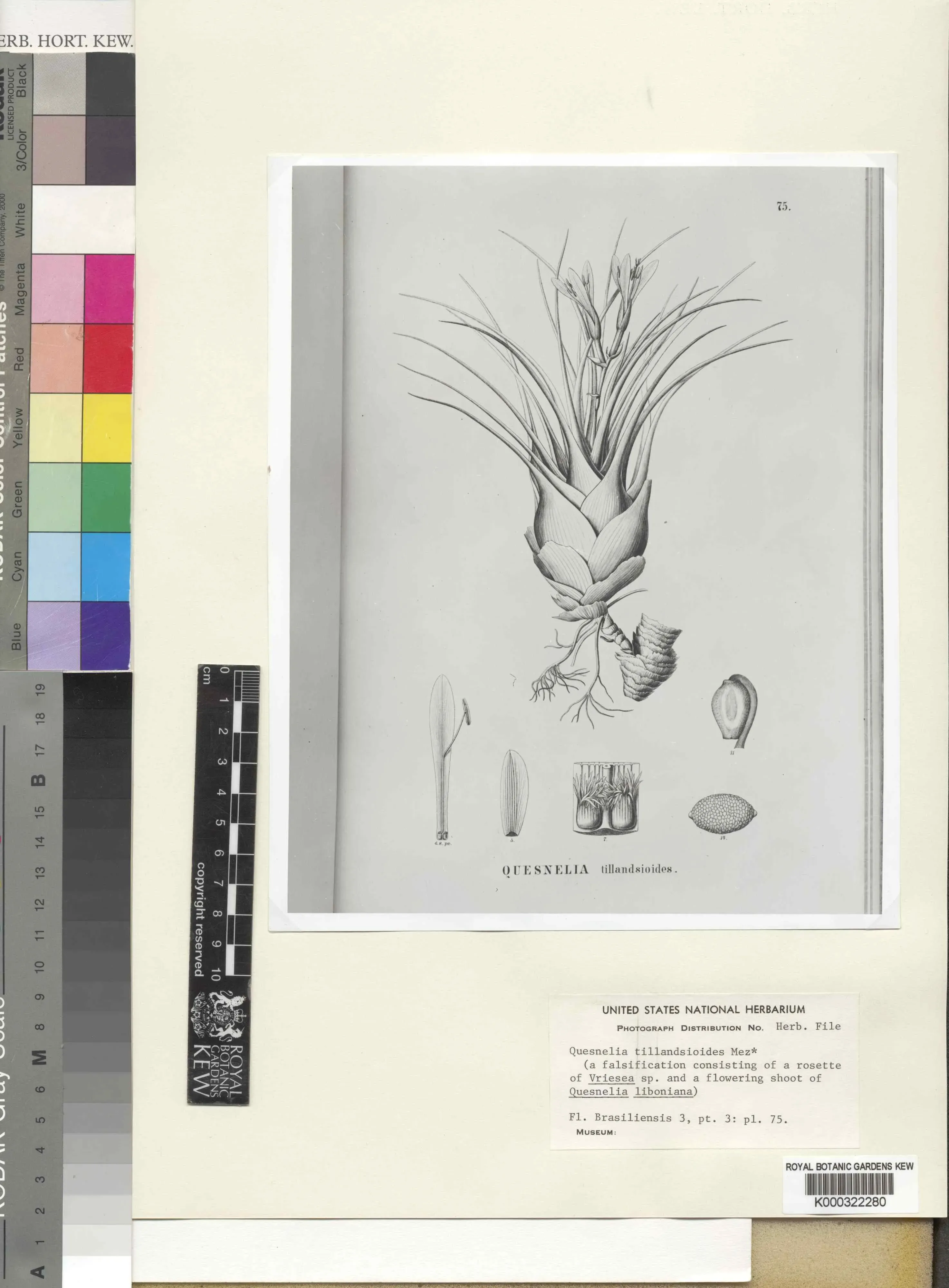
Digging further into Glaziou’s botanical career, it seems he was deliberately altering the collection information of plant specimens in his favour, making his collections look more impressive by lying about new plants that he’d ‘found’ in certain ‘rare’ locations.
In fact, a researcher later studying just a single plant family documented a two-page list of specimens in which Glaziou had revised dates and localities directly on existing labels!
Another paper suggests he was even directly ‘pirating’ specimens by copying exact labels from specimens collected earlier by someone else.
But it doesn’t stop there
Upon further investigation of this unscrupulous phenomenon, I found two more strange looking specimens.
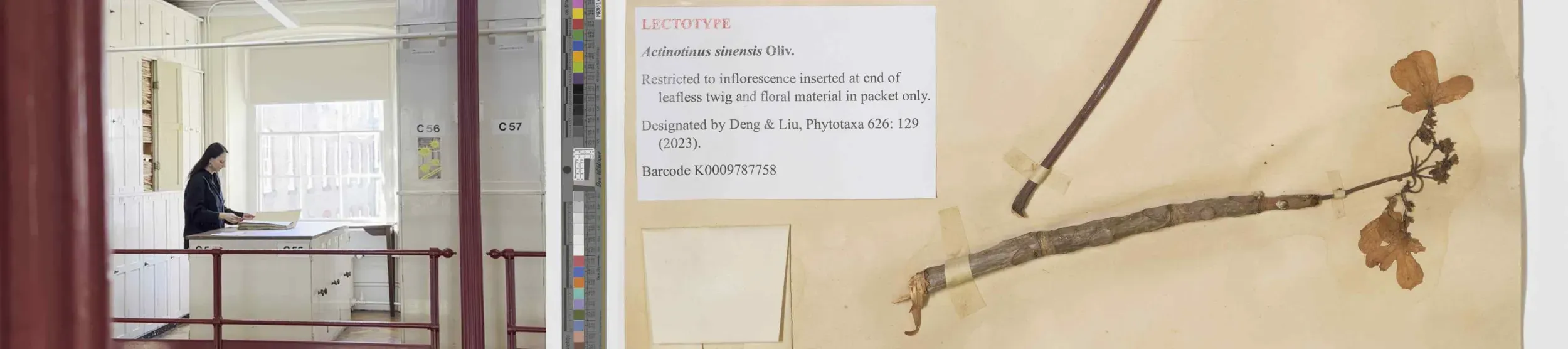
At first glance, these specimens seem unremarkable. However, if you look closely, you can see that someone has carefully inserted the flowers of a Viburnum plant into the branches of an Aesculus and deemed it a new (yet completely fake) ‘species’: Actinotinus sinensis.
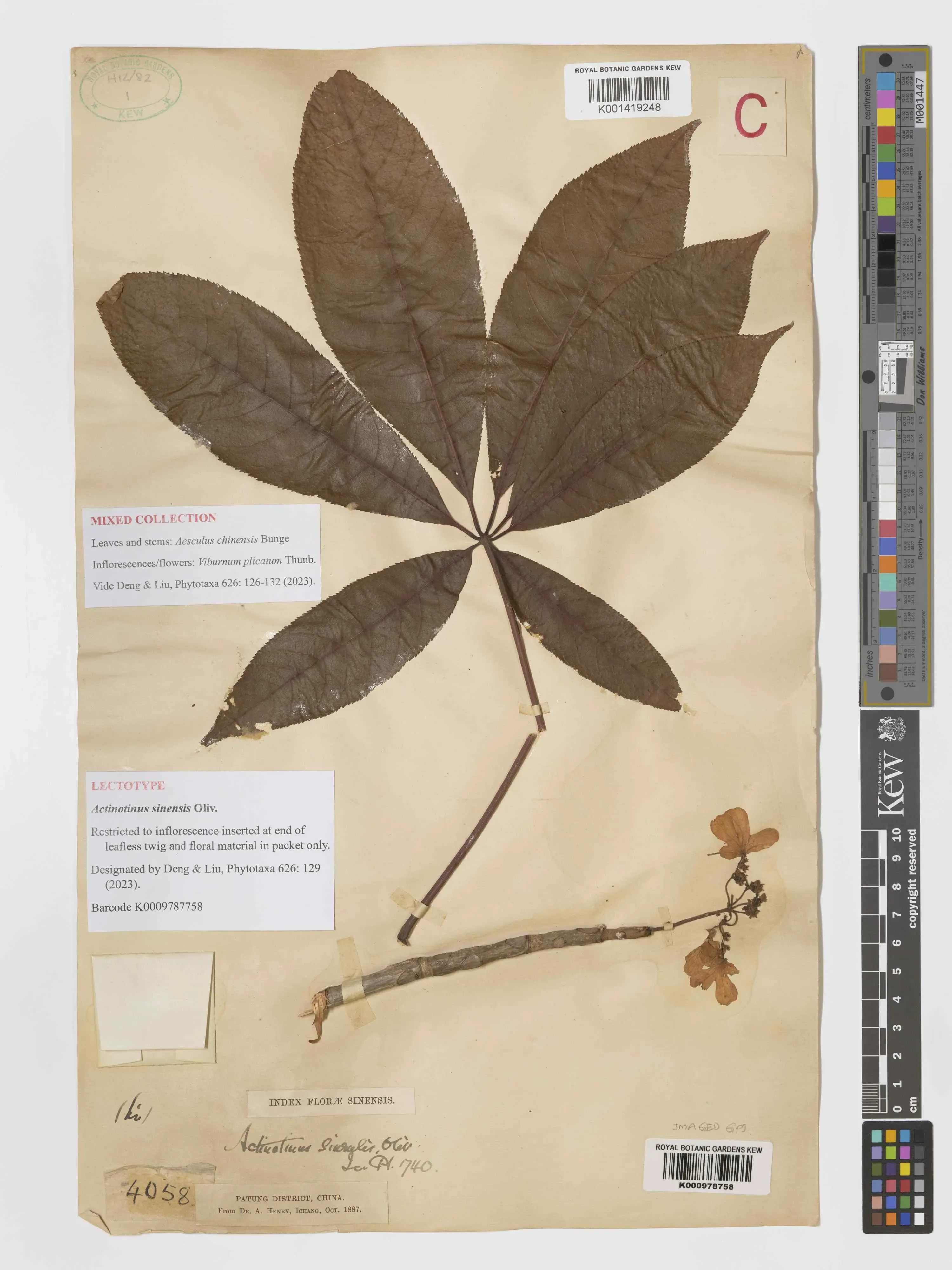
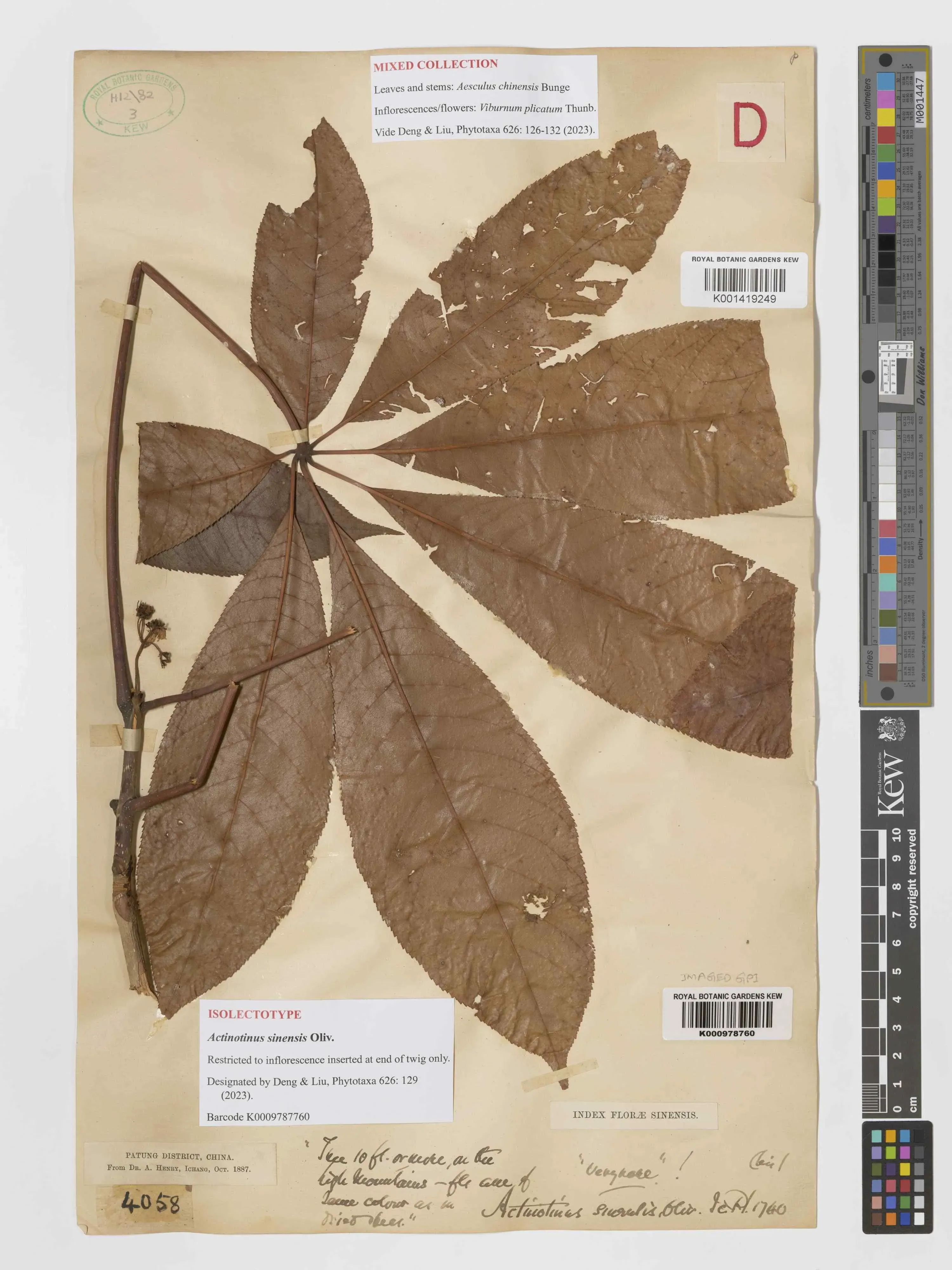
So, who pulled this prank?
We know that the specimens were collected in Patung, central China, and sent to Kew in the 1880s by Dr Augustine Henry. In letters to Kew, Henry apologised and explained that he had been unaware of the deception, attributing it to the local collector he employed in Patung.
When Kew identified all the specimens sent by Henry from Patung, they found two more plant specimens where shoots from one species had been inserted into another.
So, a major question arises from these fraudulent specimens: what was the motivation behind producing them? To answer this, I believe we need to peek into the historical context of the time they were collected.
In the Victorian era, when Henry and Glaziou were collecting, botany operated within an imperial framework.
Plants considered valuable in Europe were routinely gathered from colonised regions, often using local people who were incentivised to collect on their behalf. These plants were then cultivated abroad for food, medicine, and industry.
This system had significant ecological consequences, but it also shaped the lives of the local collectors who carried out much of the fieldwork. Their names, perspectives, and motivations were rarely recorded, leaving major gaps in the historical record and their stories untold.
Many worked under payment structures that rewarded speed and the discovery of rare species, conditions that could create considerable pressure. If Henry’s claim is true and it was the local collectors who created the hoax, then it could be these pressures that contributed to the fabrication of some specimens.
Alternatively, it may well have been Henry after all. The truth, of course, is forever lost to history.
Botany in the 21st century
Today within botanical science, emphasis is placed on transparency, innovation and partnership. As it currently stands, we have nearly 9000 of Glaziou’s herbarium specimens in our database – and who knows how many of these contain fraudulent information and are yet to be uncovered!
As a freely accessible database, Kew’s digitisation project has recently unlocked the collection data of 6.35 million specimens from the herbarium to the public. With stories such as Glaziou’s and Dr Henry’s, it leaves us wondering... what other weird and wonderful things might be found in Kew’s collections?
Want more science stories like this?
Get our latest science stories straight to your inbox by signing up to our free newsletter.
Read & watch
How a golf ball fooled scientists to become the world’s rarest fungus