Jade vine
On this page
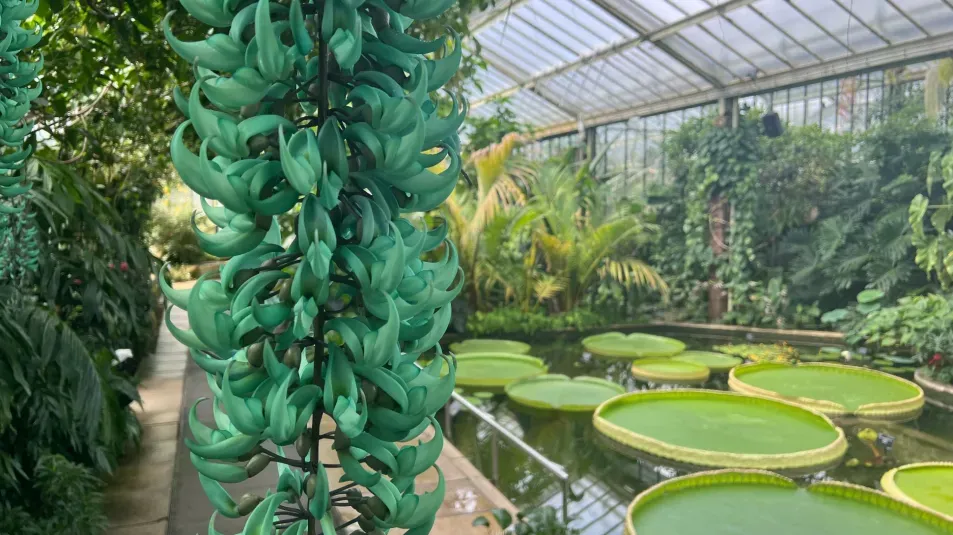
The vibrant flowers of the jade vine are native to only one place on Earth: the rainforests of the Philippines.
But today you’ll find them in the glasshouses of botanical gardens all around the world as a celebrated ornamental.
Unfortunately, due to destruction of its native habitat, the jade vine is thought to be at risk of extinction in its home.
Plant description
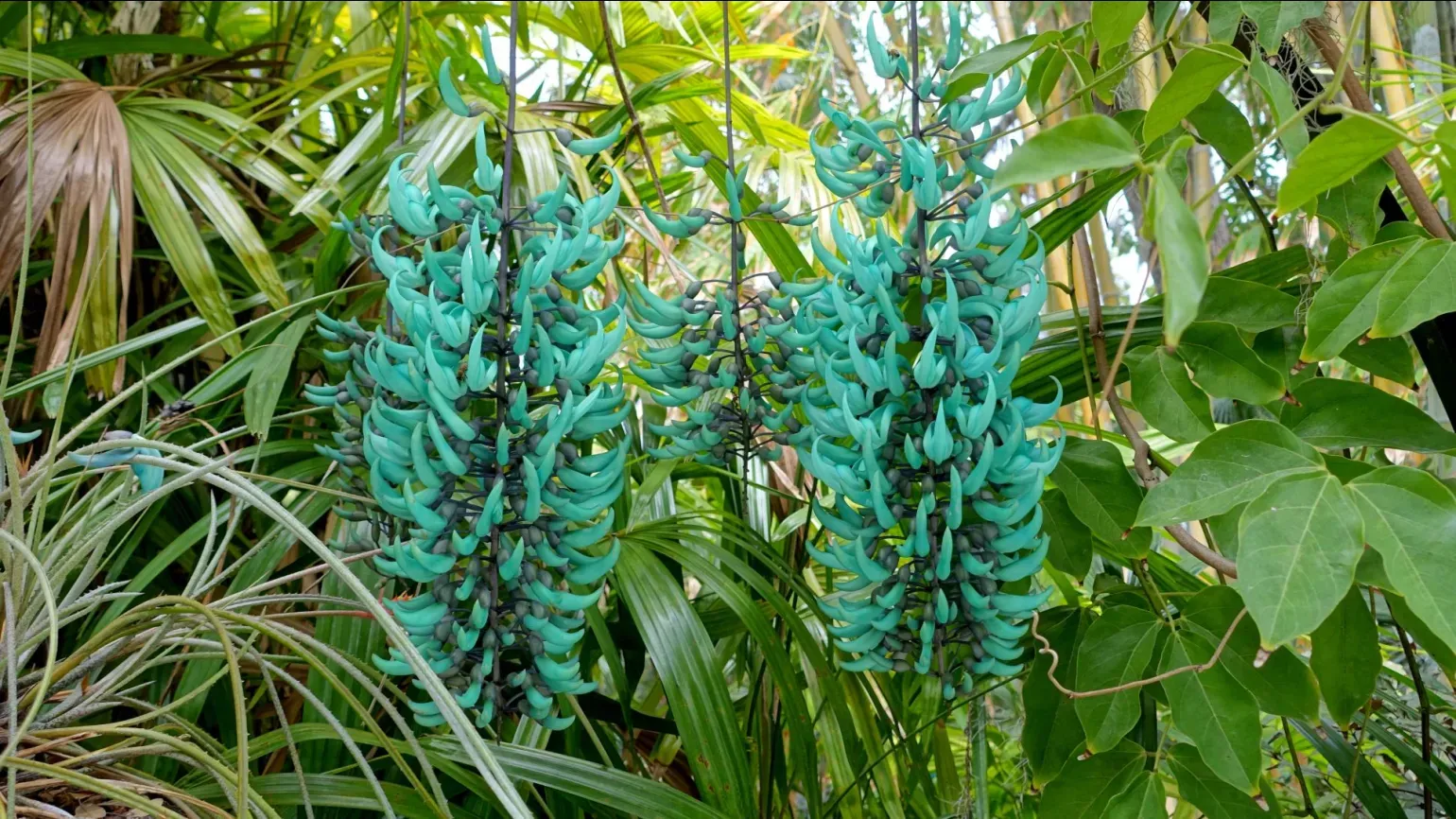
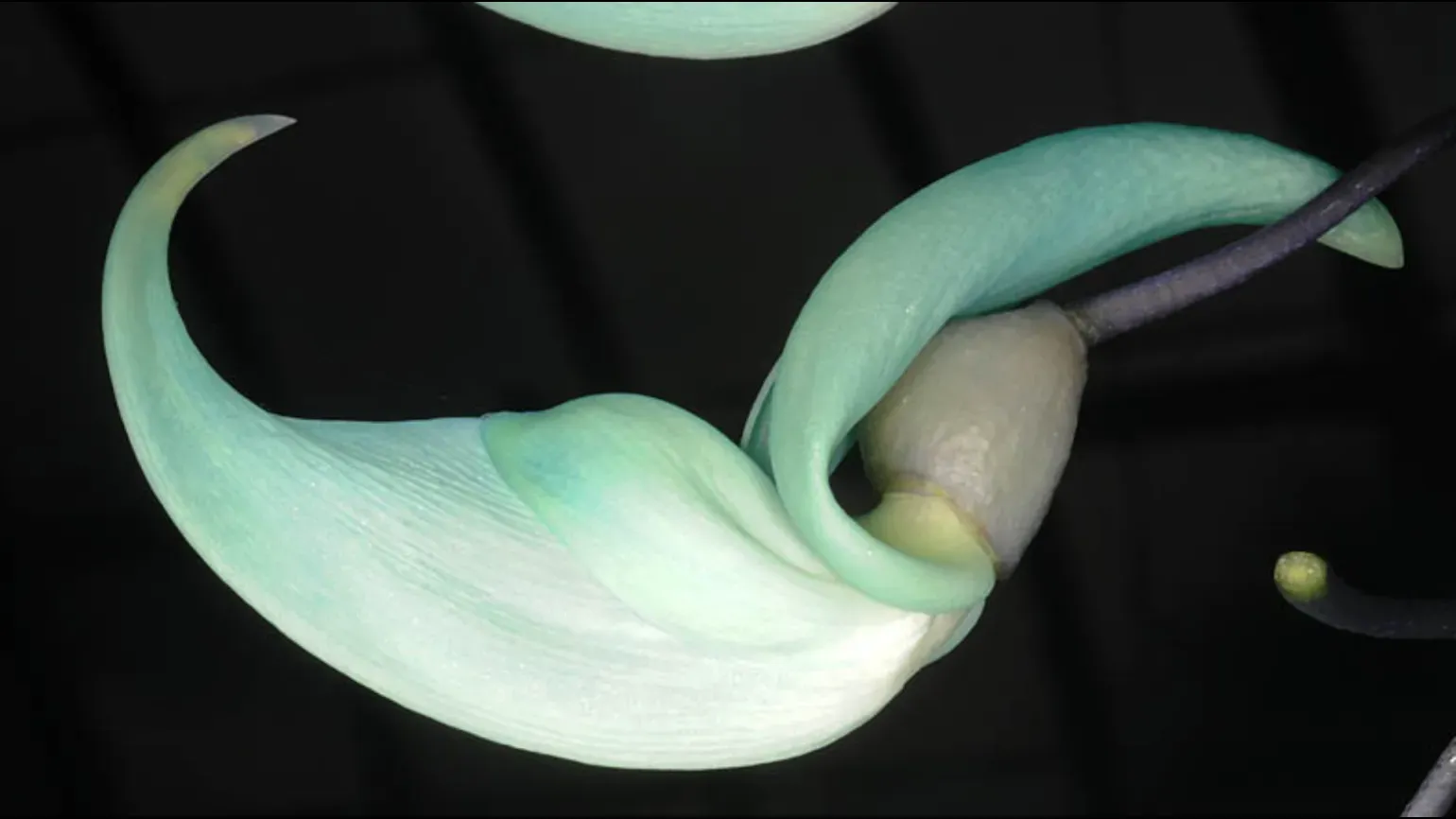
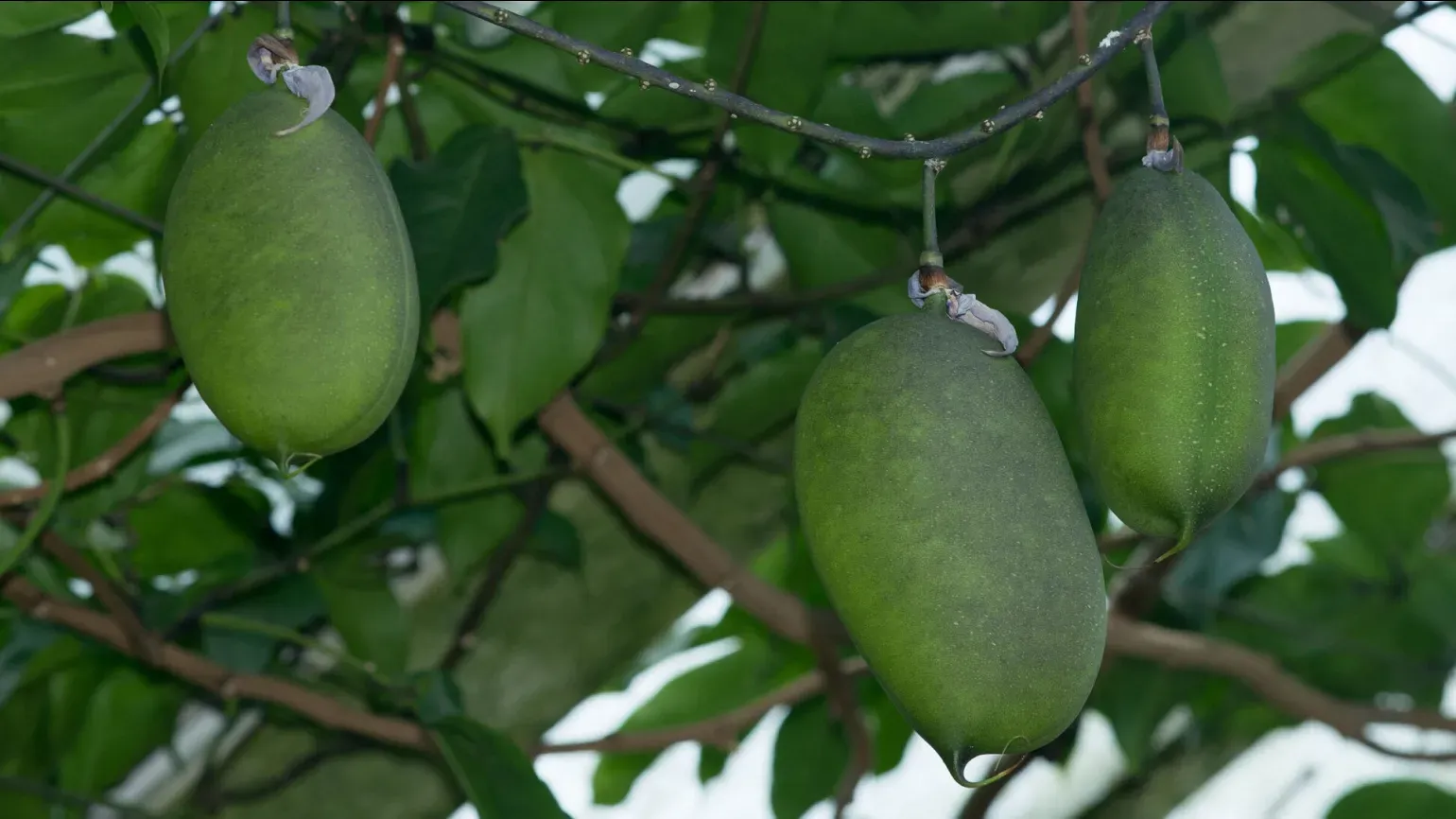
The jade vine grows as a woody vine, or liana, with stems reaching up to 18m. The leaves grow up to 25cm long, in a cluster of three leaflets at the end of a stalk. The flowers grow in vertical dangling clusters that can reach up to 3m. The individual flowers have vibrant blue-green petals that grow in a double-hooked shape. If pollinated, the jade vine produces green fleshy pods, about 15cm long that contain around 12 seeds.
Plant uses
Cultural
An image of the flowers of the jade vine appears on the reverse of the Philippine five-peso coin.
The jade vine is a popular ornamental grown in conservatories and glasshouses.
Food and drink
The flowers of the jade vide are edible, although not commonly eaten.
Did you know?
In 2016, a cousin of the jade vine with purple flowers was newly named to science.
The genus name Strongylodon means “rounded tooth”, in references to the curved tooth-like shape of the flowers.
The species name macrobotrys means “long cluster of grapes”, referring to the clusters of flowers.
Where in the world?
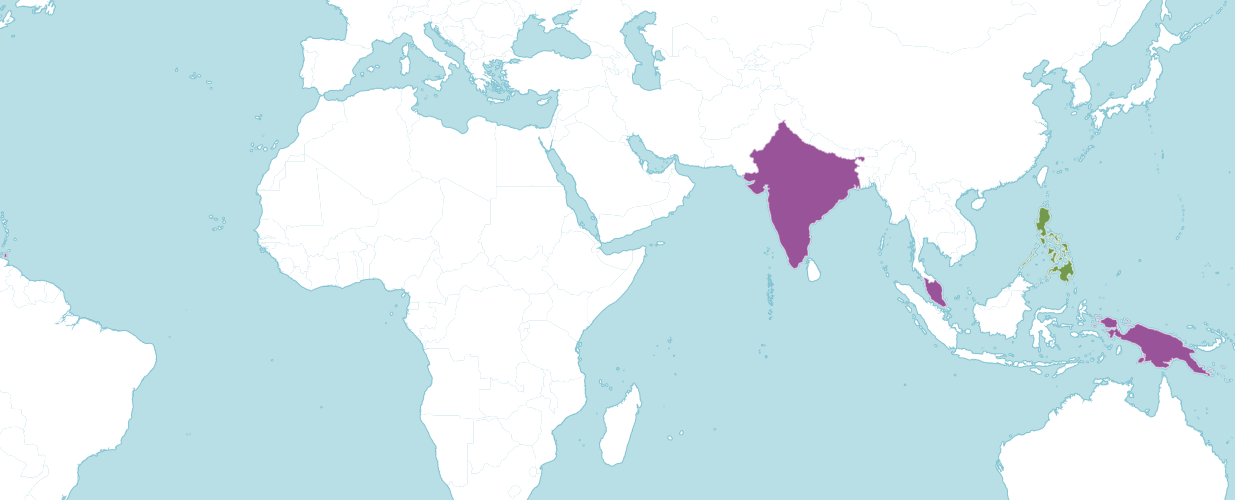
Tropical rainforests
Find it in our gardens
Kew Gardens
A botanic garden in southwest London with the world’s most diverse living plant collection.
Location
Princess of Wales Conservatory, Palm House
View map of Kew GardensBest time to see
Our work
In the wild, the jade vine is pollinated by bats, which hang upside down to drink the flower’s nectar. The flower brushes pollen onto the bat's head while it drinks, so that when it flies to another plant, it pollinates the new flower while picking up more nectar to continue the cycle. Unfortunately, bats don't call the glasshouses of Kew Gardens home. That's where our horticulturalists step in
Using their hands, the team have learned to mimic the effect of the bats. This method was first used in 1995, when Kew researcher Chrissie Prychid was able to get the jade vine in the Palm House to produce fruit pods for the first time in over thirty years. The pods were so heavy they had to be supported with nets to stop them from falling before they were fully ripe.
Understanding how to grow rare and endangered plants at Kew is key in developing new techniques which can be shared with conservationists around the world to help them protect local biodiversity.
More about this plant
Other plants
.jpgc8db.webp?itok=U_SOOrB3 "Chickpeas")
More from Kew

.jpgff58.webp?itok=aVDzeg-n "Kitchen Garden, Ellen McHale © RBG Kew")