What is the Kew International Medal?
Our award is presented to outstanding individuals for internationally recognised accomplishments aligned with our mission at the Royal Botanic Gardens, Kew: to ensure that plants and fungi are understood, valued and conserved.
First established in 1992, the Kew International Medal acknowledges the winner’s globally recognised work, which significantly enhances our knowledge and understanding of the world’s plants and fungi, upon which human lives depend.
How is the medal winner chosen?
Anyone at Kew can submit a nominee. The winner is selected by a panel comprising a selection of Trustees and Executive Board Members, for their valuable work in science and conservation.
The panel uses the following set of criteria to select the winner, which the individual and their work must adhere to:
- Building a world where plants and fungi are understood, valued and conserved – because our lives depend on them
- Providing knowledge, inspiration and understanding of why plants and fungi matter to everyone
- Helping to solve some of the critical challenges facing humanity including (but not limited to): biodiversity loss, climate change, food security, plant pathogens, fighting disease
- Increasing public awareness of the threat to plant and fungal diversity.
17th Kew International Medal winner
Dr Cécile Ndjebet
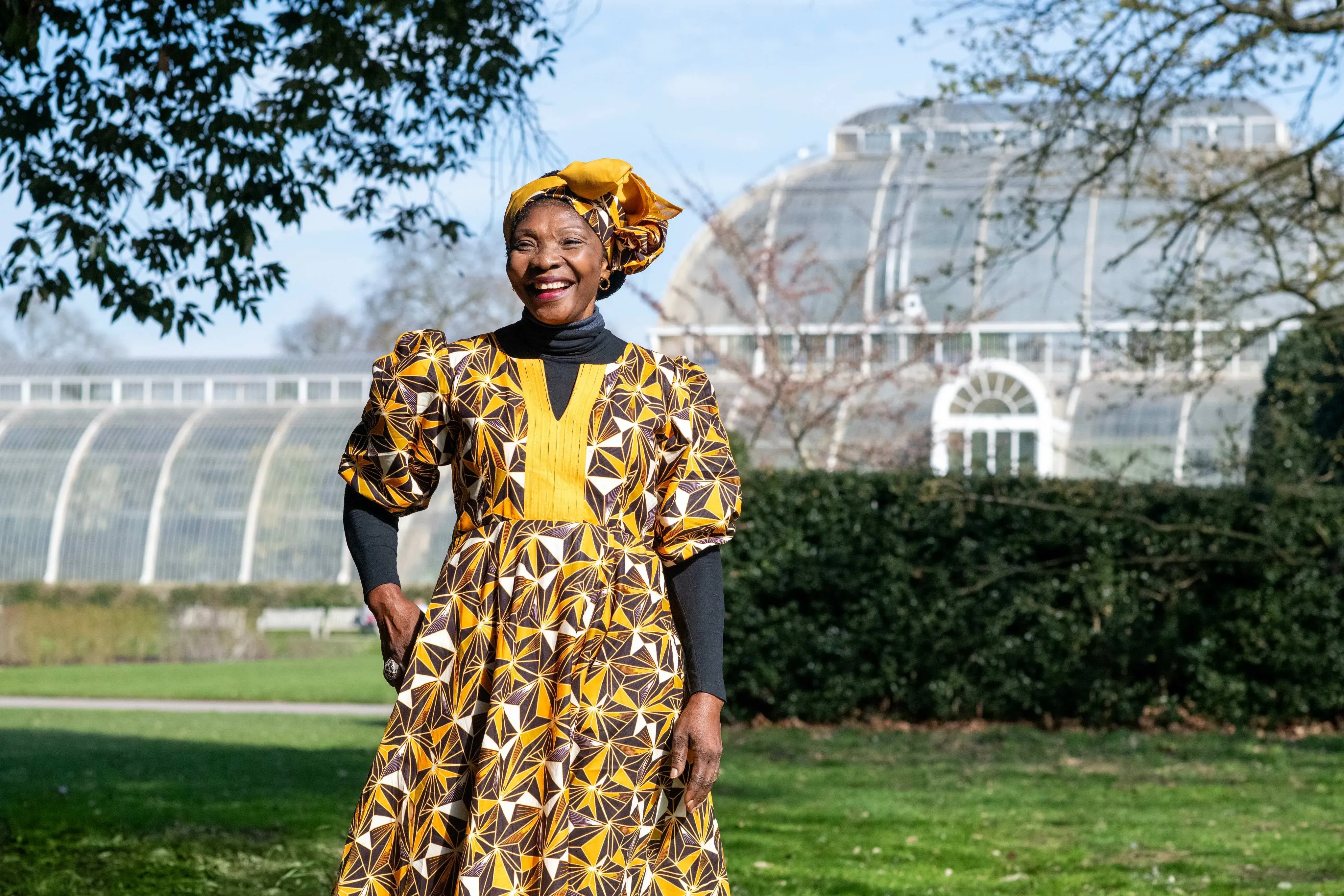
In 2025 we proudly awarded the 17th Kew International Medal to Dr Cécile Ndjebet, Cameroonian environmental activist and social forester.
Dr Ndjebet was selected for her long career campaigning for the involvement of women in forest management and their right to forested lands and resources. In Cameroon, around 70 per cent of women live in rural areas where their livelihoods depend on forests and wild produce, yet in some communities, women can’t own or inherit forested land. With Cameroonian forests increasingly under threat from illegal activities, Dr Ndjebet has dedicated her career to mobilising women to support themselves through agro-forestry initiatives.
Dr Ndjebet co-founded the African Women’s Network for Community Management of Forests in 2009 and has campaigned for the involvement of women in forest management and their right to forested lands and resources. Today, the network has representation from 20 countries across Africa.
We were delighted that Dr Ndjebet was able to receive this award and honour us with her lecture.
'Receiving the Kew International Medal is very important to me: it shows high recognition of what I’m doing together with my fellow rural women and the women and girls involved in my African community forest management network.
My vision is a world where we are successful at halting temperature increase and living in harmony with nature. Here, women and Indigenous Peoples take their rightful seat at the table to take action, and youth are taken seriously.
I see healthy ecosystems and forests providing food, clean water, and supporting livelihoods and economies for communities in Cameroon, Africa and the entire world.'
Dr Cécile Ndjebet
Previous recipients
Sir Robert and Lady Sainsbury (1994)
Sir David Attenborough (1996)
Stella Ross-Craig (1999)
Margaret Stones (2000)
Mary Grierson (2003)
Professor Peter H. Raven (2009)
Professor Jared Diamond (2012)
Professor E. O. Wilson (2014)
Dr Kiat W. Tan (2015)
Professor Sebsebe Demissew (2016)
Juan Manuel Santos, former President of Colombia (2017)
Mary Robinson, former Irish President (2018)
Professor Sandra Díaz (2019)
Sir Partha Dasgupta (2020)
Elizabeth Maruma Mrema (2022)
Suzanne Simard (2023)
Dr Cécile Ndjebet (2025)