Tropical Important Plant Areas (TIPAs)
Identifying and mapping Tropical Important Plant Areas in critical sites for plant conservation across the tropics.
Project Status
Project lead
Department
Location
Plants are often highly under-represented in conservation planning schemes because information on plant diversity is not available in formats that are accessible to policy makers and conservationists.
Two in five of the world’s plant species are estimated to be threatened with extinction, and many of these occur in the tropics, where species extinction continues due to destruction of natural habitats for agriculture, industry, energy and other development.
There is, therefore, an urgent need to unlock data on tropical plant diversity and distributions so that it can be used to effectively prioritise conservation efforts.
The Important Plant Areas initiative, established by Plantlife International, provides an effective model using simple but scientifically sound and verifiable criteria.
Kew is working with its partners in selected countries and territories across the tropics to identify the sites that support globally threatened species and habitats and/or exceptional plant richness, designating them as Tropical Important Plant Areas (TIPAs) and enabling national authorities to prioritise their protection and sustainable management.
We have complete or ongoing TIPAs partnerships in ten countries / territories where we have strong partnerships and robust data sets in place to enable TIPA identification: Bolivia, British Virgin Islands, Cameroon, Ethiopia, Guinea, Indonesia, Mozambique, Sierra Leone, Turks and Caicos and Uganda.
The Tropical Important Plant Areas Explorer online portal has information for all the 343 TIPAs identified so far. Information on these sites and the plant species they contain is being disseminated via books and papers in scientific journals, with information on the component species available through Plants of the World Online. The TIPAs designation process is complete for six countries / territories so far, but work in these countries continues with programmes for ex situ conservation of plants, education and further botanical research.
Information from the TIPAs programme will feed directly into conservation prioritisation for delivery of on-the-ground conservation actions by our partners.
Darbyshire, I. et al. (2017)
Important Plant Areas: revised selection criteria for a global approach to plant conservation
Biodiversity and Conservation 26: 1767–1800. https://doi.org/10.1007/s10531-017-1336-6.
Fanny Massally
Alexandra Roberts
Supported by
-
The TIPAs programme is generously supported by a range of funders - details are provided within the specific TIPA project pages. For opportunities to fund the continuation of this programme, please contact Iain Darbyshire.
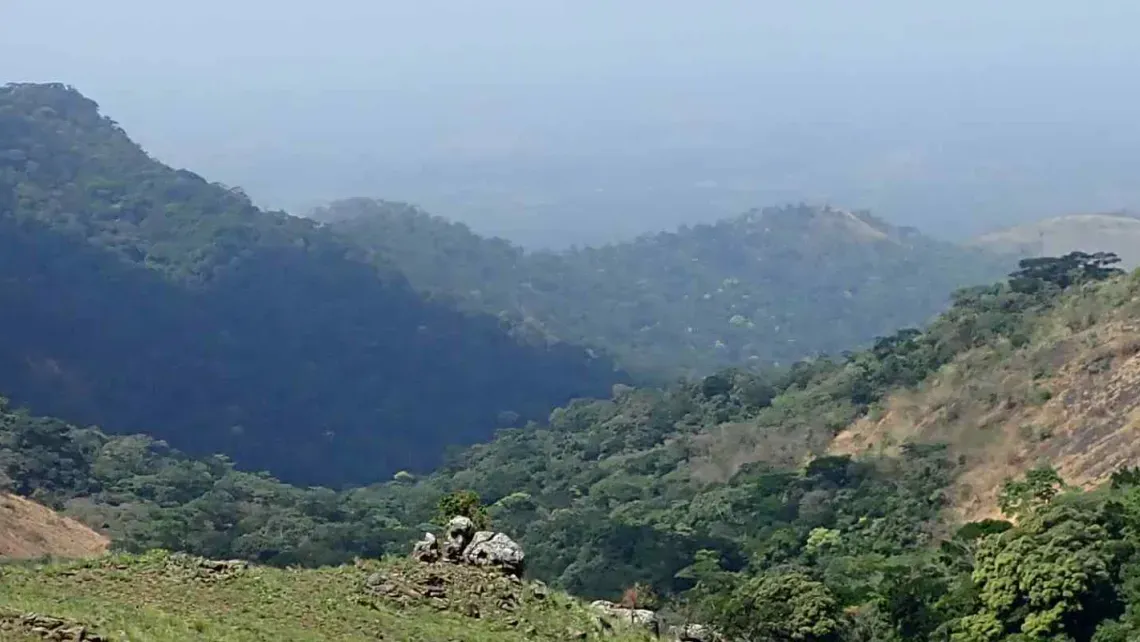
Tropical Important Plant Areas (TIPAs) in Sierra Leone