5 min read
5 plants and fungi named after Sir David Attenborough
Celebrate the 100th birthday of the UK's favourite nature presenter with these five species named in his honour.
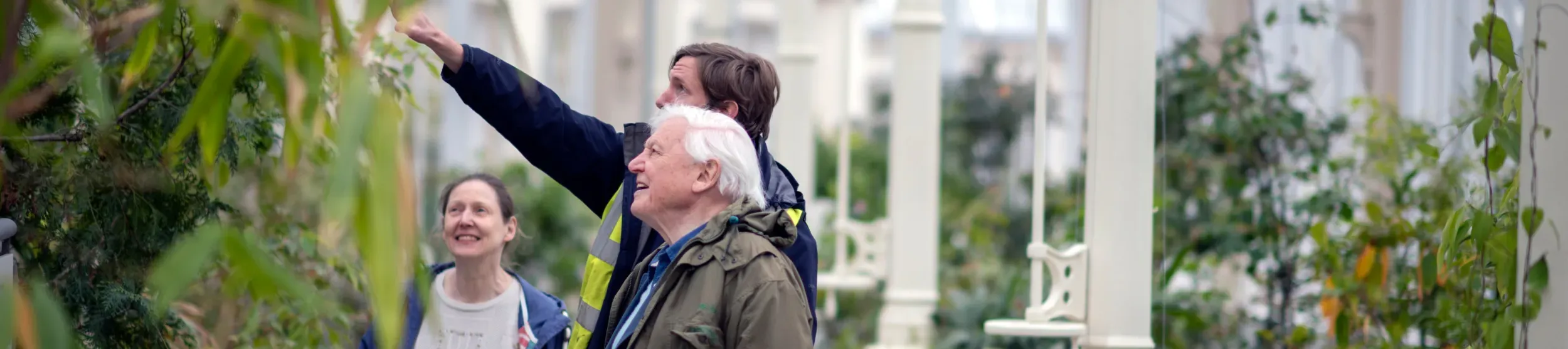
8 May 2026 marks the 100th birthday of Sir David Attenborough, an icon in the world of biology and wildlife.
Starting his career as a producer for BBC quiz shows and documentaries, Sir David went on to become one of the world's most trusted voices in natural history. With a career spanning eight decades, he’s the only person to have won a BAFTA for programmes in black and white, colour, high-definition, 3D and 4K.
Along with a host of other awards, most notably a knighthood in 1985 and a Kew International Medal in 1996, he’s been recognised for his work inspiring people to protect the natural world with many species named in his honour.
Discover five species of plants and fungi named after Sir David, including a real-life zombie fungus and a carnivorous pitcher plant.
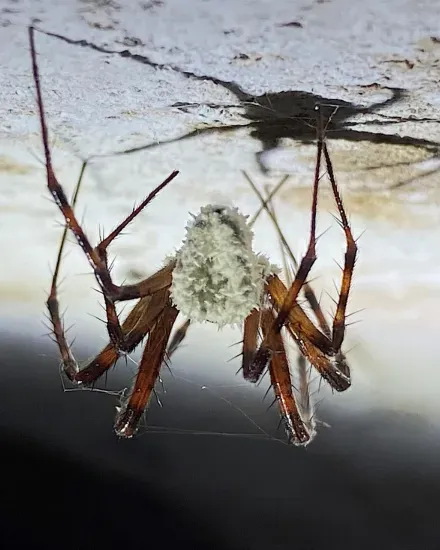
A spider-infecting fungus: Gibellula attenboroughii
One of the strangest species to bear Sir David’s name is a parasitic fungus from Northern Ireland.
The fungus was first spotted on a spider in a disused gunpowder store during an episode of the BBC's Winterwatch in 2021. When scientists saw the infected spider on television, they tracked it down and identified the fungus as a species previously unknown to science.
The scientists that identified this new species named it in honour of Attenborough as a pioneer of BBC natural history programmes, including the Winterwatch show that first drew attention to the fungus.
Gibellula attenboroughii is part of a group of fungi often called 'zombie fungi', which also includes the well-known Cordyceps. These fungi infect invertebrate hosts, like spiders and insects, take control of their behaviour, then kill them when they sprout fruiting bodies to spread their spores.
In the case of Gibellula attenboroughii, the victim was an orb-weaving cave spider (Metellina merianae). Today, the fungus-infected spider from Northern Ireland is stored in our Fungarium.
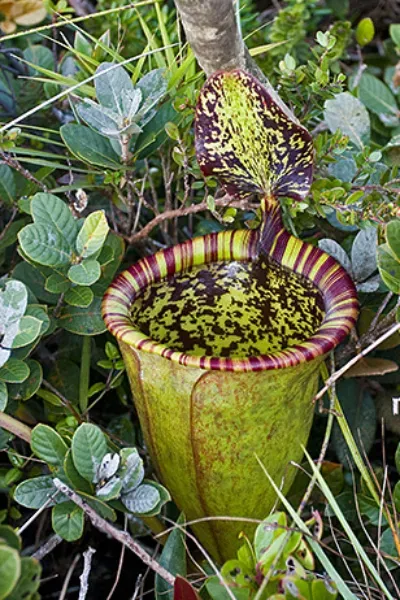
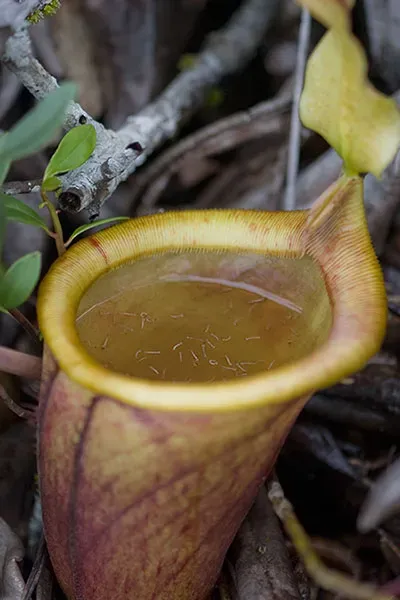
A giant carnivorous plant: Nepenthes attenboroughii
Only found on Palawan in the Philippines, Attenborough's pitcher plant grows some of the largest pitcher traps in the world.
Tropical pitcher plants, also known as Nepenthes, tend to grow in acidic soils that are low in nutrients. In order to survive, these plants feed on unfortunate animals, usually insects like flies or beetles, that tumble into their traps to be dissolved in digestive fluids.
However, not every insect meets its end in these traps. In fact, some begin their lives there!
Unlike many other Nepenthes, the large pitcher traps of Attenborough's pitcher plant are open to the elements. The rainwater that collects in them forms a separate layer on top of the digestive fluids, allowing young aquatic insects, like mosquito larva, to safely live there.
This species was first described to science in 2009. The scientists chose to name the species after Sir David in honour of both his 80th birthday, and his work making natural history accessible and understandable to millions.
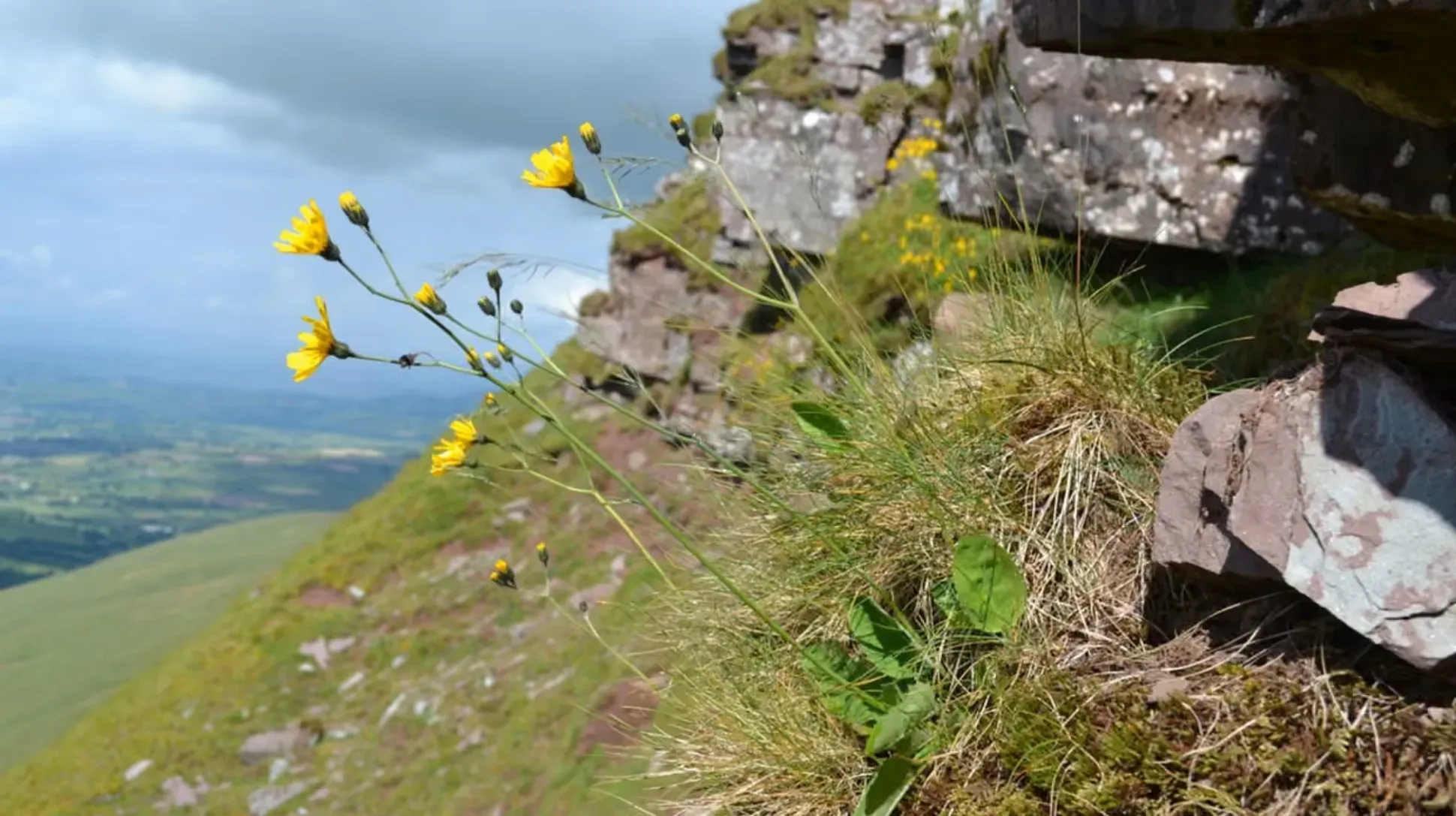
An isolated hawkweed: Hieracium attenboroughianum
Found on a remote outcrop of rocks in southern Wales in 2015, a species of hawkweed became the first non-extinct British species to be named after Sir David Attenborough.
Hawkweeds are close relatives of dandelions and have similar yellow-petaled flowers. Attenborough’s hawkweed is currently only found among the rocks of Cribyn, a mountain peak in south Wales.
First collected in 2004, it took ten years for taxonomist Tim Rich to confirm that the hawkweed wasn’t a pre-existing species.
Rich decided to name the species in honour of Sir David as he inspired him to study ecology when he was young.
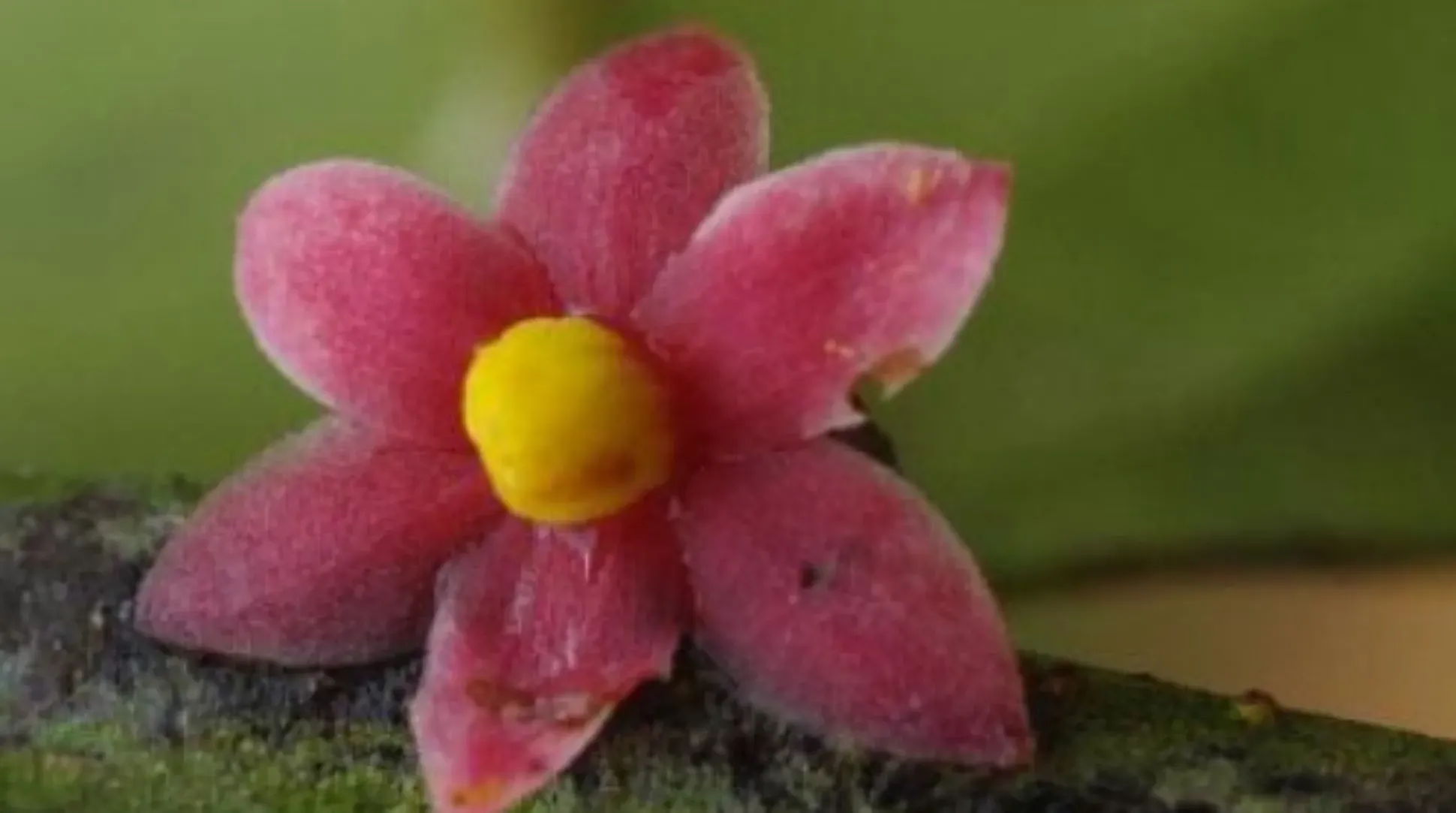
A bee-friendly tree: Sirdavidia solannona
Less than two months after the publication of Attenborough’s hawkweed, yet another new species was bearing Sir David’s name.
In February 2015, a genus from Monts de Cristal National Park in Gabon was named as new to science* in honour of Sir David by four scientists. Sirdavidia solannona has only been found in three locations, so has been listed as endangered.
The flowers of Sirdavidia make use of a technique known as buzz pollination, where bees rapidly vibrate their wings without flying to shake loose the pollen.
Many flowers are adapted to make use of this pollination trick, including tomatoes and potatoes. But Sirdavidia isn't related to any of those plants: it's in the Magnoliid group, which includes magnolias, cinnamon and avocados.
It's the first Magnoliid found to have buzz pollinated flowers, making this an important discovery that helps us understand more about how these plant groups evolved millions of years ago.
The scientists stated that they named the species after Sir David because his passion for nature has inspired not just them, but an entire generation of biologists and naturalists.
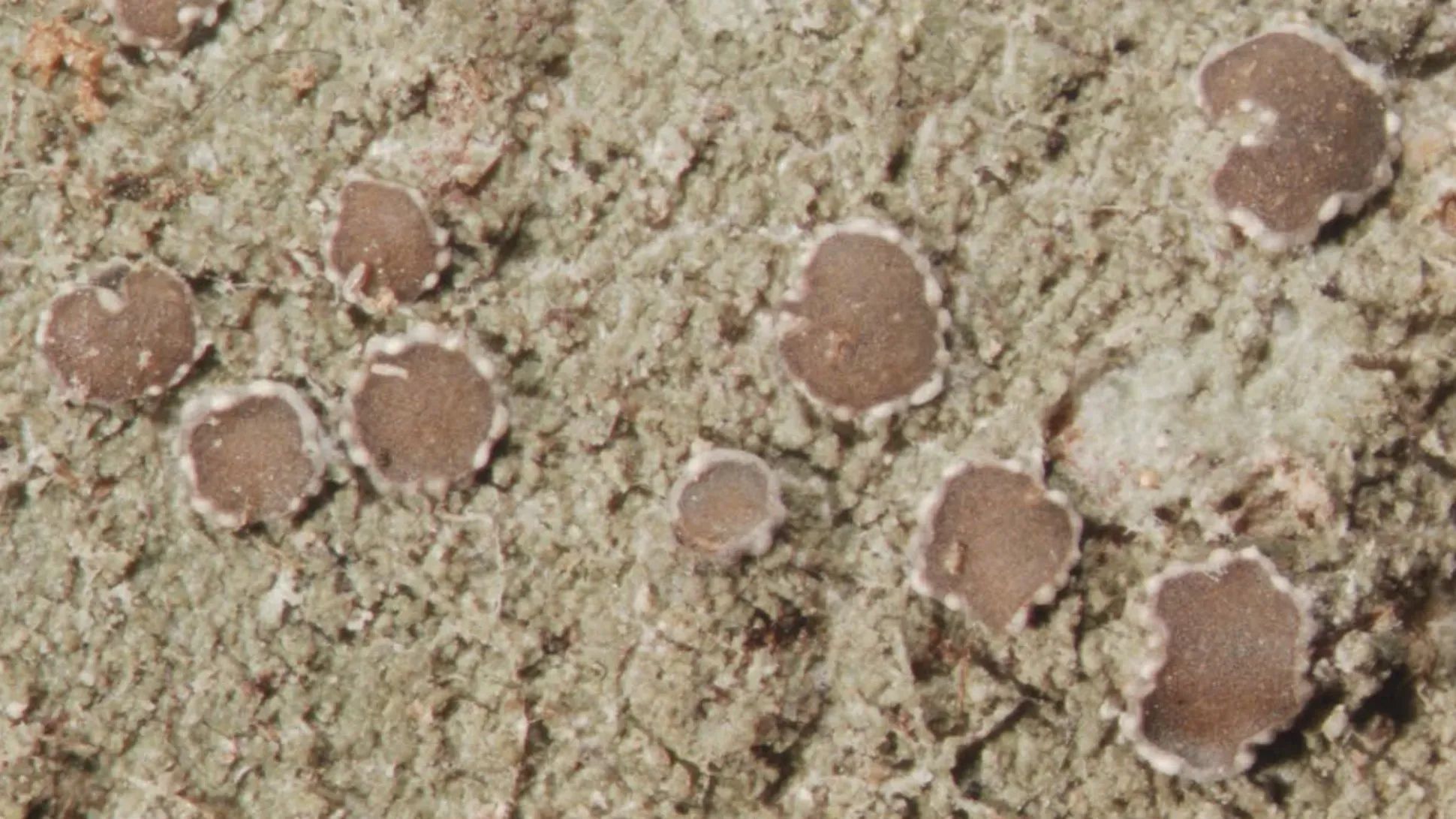
A Bolivian lichen: Malmidea attenboroughii
Often overlooked, there are even lichens named after Sir David Attenborough.
In 2019, a species of lichen new to science was found growing on the bark of trees in the Jardín Botánico La Paz, part of the Higher University of San Andrés in La Paz, Bolivia.
Malmidea attenboroughii grows on the bark of trees, forming small circular brown crusts.
Lichens are made up of two or more different species living together: an alga and a fungus. The fungus provides a structure that protects the alga, and the alga feeds both by producing sugars through photosynthesis.
The team who described this new species chose Sir David’s name to honour his work in popularising biodiversity and the protection of nature.
Of course, these are only some of the floral and fungal species: there’s even more insects, fish, reptiles and mammals that hold names in honour of Sir David Attenborough.
It’s a testament to his inspirational power of his work that shares the incredible wonder of the natural world.
However, it's notably that at least two of these species are at risk of extinction, with Nepenthes attenboroughii listed as critically endangered, and Sirdavidia solannona as endangered. And the rest could soon be under threat too, from the twin challenges of biodiversity loss and climate change.
To celebrate Sir David's birthday, why not start taking action to help protect plants and fungi around you? Try planting for the future by grow native trees and pollinator-friendly plants to support local biodiversity. Or help protect natural habitats by volunteering with local conservation groups.
*We use the phrase 'named new to science' to highlight that many of these species are known to local peoples, and are only newly named to Western science.
Read & watch

What happens when you spend ten years protecting the world’s rarest plants?
Jade vine: the beautiful flower with the mystery pollinator